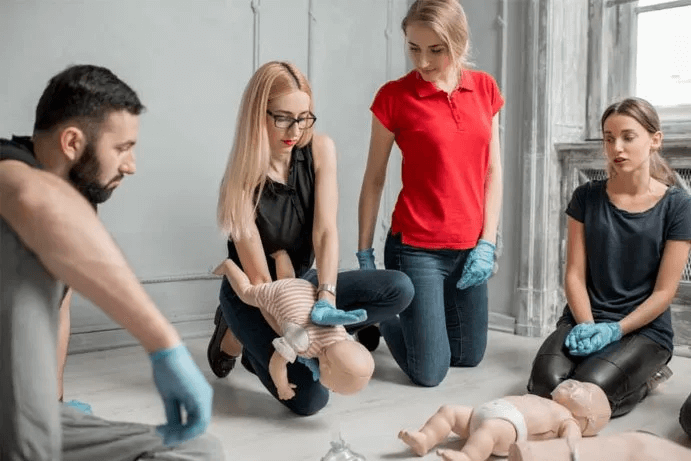
In UK childcare, nothing soothes parents’ nerves quite like knowing you’ve invested in robust child-specific first aid training. Whether your setting is Ofsted-registered or you simply want clarity on requirements, legislation draws a pretty clear boundary. The Department for Education’s Early Years Foundation Stage (EYFS) framework pulls no punches: if you care for infants or children up to eight within Ofsted-registered settings, paediatric first aid is mandatory. Those statutory words might feel clinical, but beneath them they’re threads binding you to real world needs in nurseries, schools, childminding groups, or after school clubs.
You will find that the minimum expectation is a 12-hour paediatric first aid course if you wish to count towards ratios in an early years registered setting. That doesn’t leave room for guesswork, if your organisation has any childcare role, at least one person with a valid certificate should always be present. Life rarely gives advance warning, but training ensures some situations don’t spiral. Regulations might feel dry, but they exist to keep uncertainty at bay.
Types of Paediatric First Aid Courses
You might spot an impressive crop of course options when you venture online: Emergency Paediatric First Aid, Full Paediatric First Aid, even tailored variants depending on workplace or daily risks. Choosing between them, your main task is teasing out which syllabus matches your needs, and compliance obligations.
The Emergency Paediatric First Aid course is the shorter sibling, typically 6 hours. It covers the fundamentals, CPR, dealing with choking, minor injuries, and basic patient monitoring. If you supervise small clubs or want essential skills as a parent, you might find this route sufficient. But, for anyone working in Ofsted-registered early years settings or wishing to qualify for ratio roles, the Full Paediatric First Aid course (usually 12 hours) is non-negotiable. You get coverage not only for emergencies, but medical conditions, allergies, resuscitation for infants and children, and scenario-based practice.
There are also bespoke courses: for school staff, for sport coaches, for activity leaders. Providers occasionally tweak modules to meet risks unique to your environment. And with all the choices, your focus should track back to what your work and the law require, not what sounds grandest or most cost efficient.
Regulatory Standards and Accreditation
A quick glance at certificates, and you will notice not all are weighed equally. If you pick a course simply because it pops up on the first search page, you might miss a crucial detail: accreditation. The Department for Education spells out that your first aid course must meet Early Years Foundation Stage statutory framework standards. Sometimes, you might need to double-check if a training provider’s credential has that all-important badge from regulatory bodies, such as Qualsafe Awards or Ofqual.
Some reputable names you’ll find in the UK include St John Ambulance and the British Red Cross. Their courses are gold standards for both robust content and compliance confidence. Should you lean towards a lesser-known provider, always request documentation on their curriculum’s alignment with EYFS. Your certificate, in the case that Ofsted inspects, must be valid and issued by an accredited body. You can skip a lot of regulatory headaches by confirming this early.
How to Choose the Right Paediatric First Aid Course
Nodding along to the statutory minimum is one thing. Actually matching a course to your needs (and sometimes, your preferred learning style) takes curiosity. Not every course will fit your schedule or the tempo of your environment.
Course Delivery Methods
Gone are the days of a stuffy hall and hours glued to a chair. You can opt for:
- In-Person Training: Let’s call this the classic approach. You get hands-on, instructor-led sessions, with practical assessments and feedback. Schools or nurseries with several staff might find this model suits group learning best.
- Online Only: Tempting for busy parents or lone learners, but beware: pure online options rarely meet the requirements for statutory recognition. The practical nature of first aid skills demands live, demonstrable assessment.
- Blended Learning: Here, you’ll find part of your learning delivered online (theory), with a hefty in-person component for skills demonstration. This has become increasingly popular, thanks to both flexibility and compliance.
You will want to check with your workplace or regulator: some settings will refuse certificates without in-person elements. Always ask before enrolling.
Duration and Assessment of Courses
An accredited full paediatric first aid course should stretch over 12 contact hours, typically split over two days. Shorter routes (such as the six-hour Emergency Paediatric First Aid) are valid for some, but won’t fulfil all regulatory requirements, particularly for first aiders counted in ratios.
Assessment varies. Practical demonstration sits at the heart of most programmes. You’ll apply CPR, manage choking scenarios, respond to simulated emergencies. Sometimes you’ll find written tests or quizzes layered in, offering both breadth and depth. It might seem daunting, but these elements are there so you and your employer can feel certain your knowledge isn’t paper-thin.
Who Needs Paediatric First Aid Training?
You’d be forgiven for thinking paediatric first aid is the business only of nursery staff or professional childminders. But scroll through recent headlines, or even office memos, and you’ll spot a widening circle of expectation.
- Ofsted-registered early years providers: It’s statutory, no escape here.
- Breakfast and after-school clubs: Many also fall under Ofsted scrutiny, bringing you into the bracket.
- School staff: Especially those with direct responsibility for younger children.
- Sports coaches and extracurricular leaders: If your role involves supervising children, training is more than good practice, it’s often written into safeguarding policies.
- Parents wanting confidence: Not required by law, but some parents opt in, simply to feel empowered.
You may find that even in informal settings, awareness of first aid becomes the expectation rather than the exception. Social responsibility grows when stories of quick action, or missed opportunity, circle in newsletters.
In Closing
So where does all this lead? Paediatric first aid course routes in the UK don’t offer one straight path, but rather a patchwork, mapped by regulation, but navigated by your intent and setting. You hold the choice in your hands: match the course to your setting, keep an eye on those accreditation marks, and pick a learning method that actually teaches your hands what to do under pressure.
Take a moment, would you feel ready if the unexpected happened right now? You will find that the simple act of enrolling on a reputable course might shape more than a CV. It rewires your sense of readiness. And somewhere down the line, as a chaotic morning turns calm because you acted without missing a beat, it’s possible you’ll see the value with absolute clarity.
